
The London Stock Exchange (LSE) is one of the world’s most influential equity markets, and its movements often ripple far beyond stocks. For forex traders, sudden shocks at the LSE can act as catalysts for major currency swings particularly in GBP and EUR pairs, but also in broader risk-sensitive currencies like USD/JPY, AUD/USD, and CHF crosses.
In this case study, we’ll explore how specific LSE market shocks in recent years have spilled over into forex markets, what mechanisms drive these moves, and what lessons traders can take away for the future.
Why LSE Shocks Matter for Forex
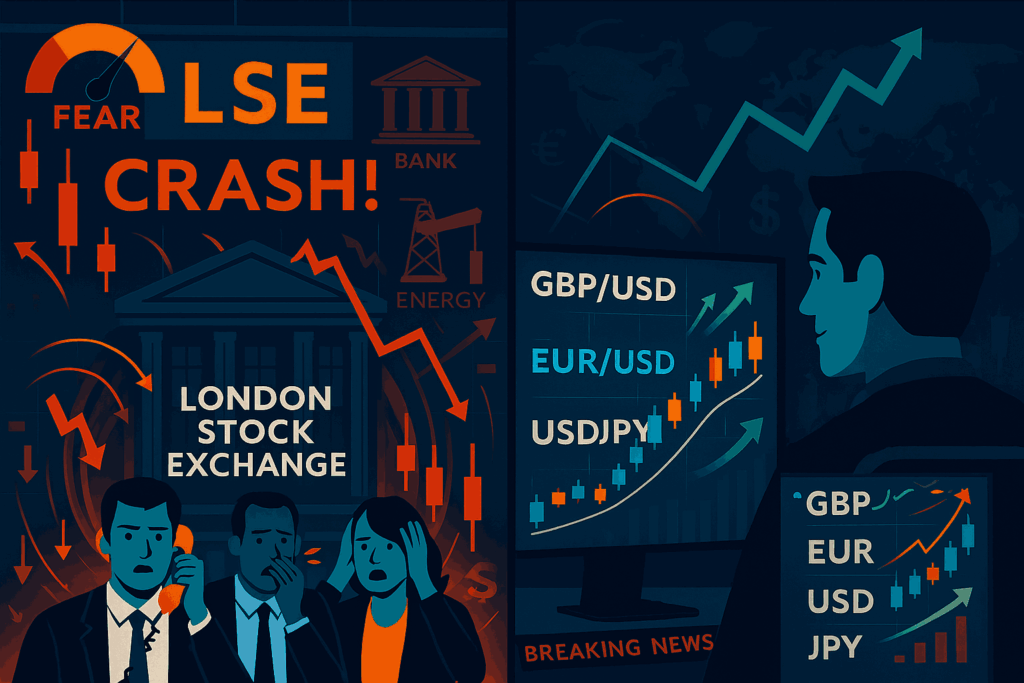
The LSE represents a hub for both domestic UK capital flows and global investment sentiment. When major surprises whether corporate, political, or macroeconomic hit the LSE, they create:
- Portfolio adjustments: International investors hedge or rebalance exposure, often requiring GBP or EUR transactions.
- Risk sentiment shifts: Sharp equity drops fuel risk-off flows into safe havens like USD, JPY, and CHF.
- Sector-specific spillovers: When financials or energy stocks lead moves, GBP often reacts disproportionately given the UK’s reliance on these industries.
Case Study 1: Brexit Referendum Fallout (June 2016)
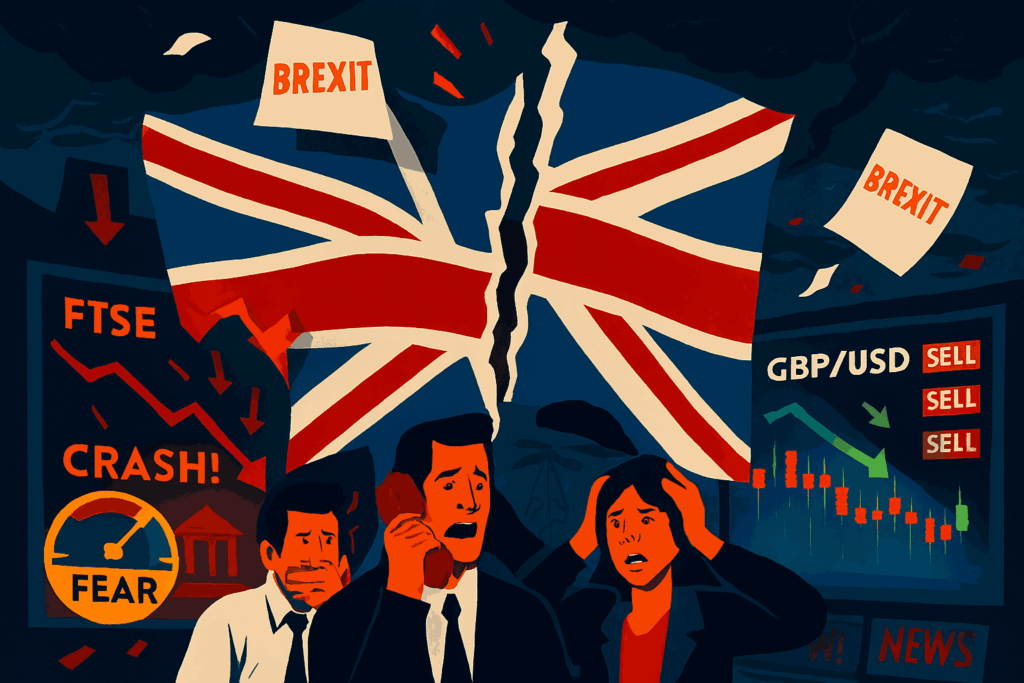
When the Brexit vote shocked markets, the LSE saw one of its most volatile trading sessions in decades. The FTSE 100 plunged at the open, and bank stocks in particular faced heavy losses.
Forex impact:
- GBP/USD collapsed nearly 10% overnight, one of the steepest single-day declines in modern FX history.
- EUR/GBP spiked higher as uncertainty spread across Europe.
- Risk aversion sent USD/JPY and CHF crosses sharply lower.
Lesson: Political shocks that hit the LSE can trigger systemic volatility in GBP, with spillover into broader global markets. Traders need to anticipate “event risk windows” like referendums and elections.
Case Study 2: COVID-19 Pandemic Market Shock (March 2020)
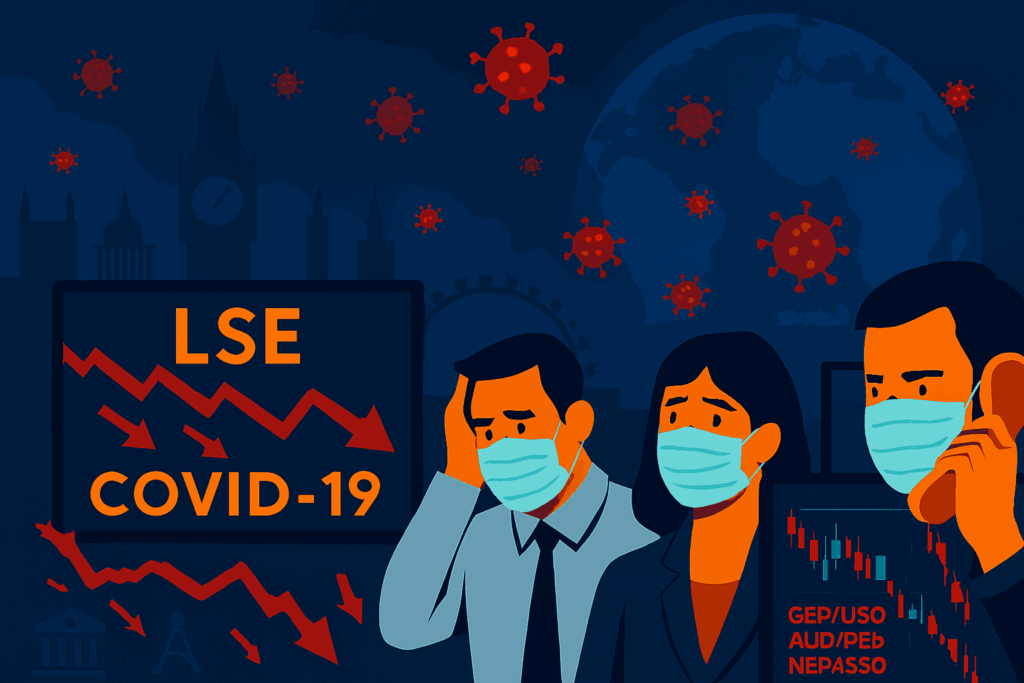
In March 2020, global markets melted down as COVID fears peaked. The LSE experienced repeated circuit-breaker triggers and a brutal selloff in travel, retail, and financial stocks.
Forex impact:
- GBP/USD dropped from 1.30 to 1.14 in less than two weeks, marking its weakest levels since 1985.
- Risk-off flows pushed AUD/USD and NZD/USD to multi-year lows.
- Safe havens like USD and JPY strengthened dramatically.
Lesson: LSE shocks during global crises amplify volatility in GBP and risk-sensitive currencies. Correlation between equity panic and FX safe-haven demand is strongest during systemic shocks.
Case Study 3: UK Mini-Budget Crisis (September 2022)
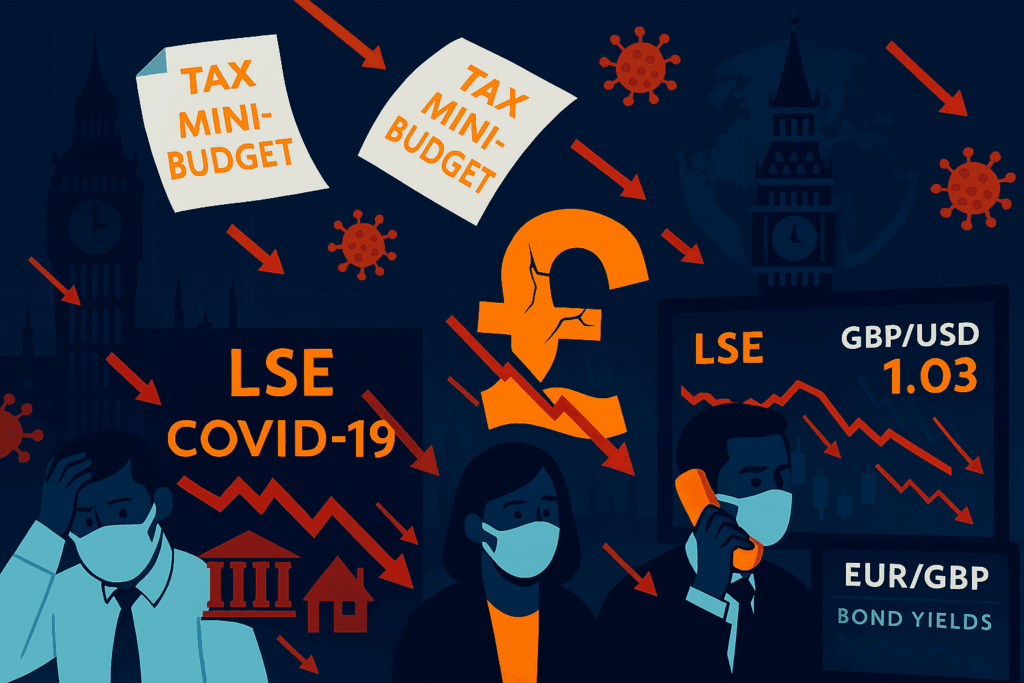
The UK government’s surprise “mini-budget,” featuring unfunded tax cuts, triggered a collapse in gilt markets and a sharp selloff in UK stocks. The LSE saw significant losses across banking and real estate sectors.
Forex impact:
- GBP/USD plunged to an all-time low near 1.03.
- EUR/GBP surged, reflecting concerns about UK economic credibility.
- Volatility spread across FX markets as traders scrambled to price in spillover risks.
Lesson: Fiscal policy shocks that hit UK bonds and equities also reverberate instantly in forex. Traders monitoring the LSE open had a front-row seat to this historic GBP meltdown.
Practical Takeaways for Traders
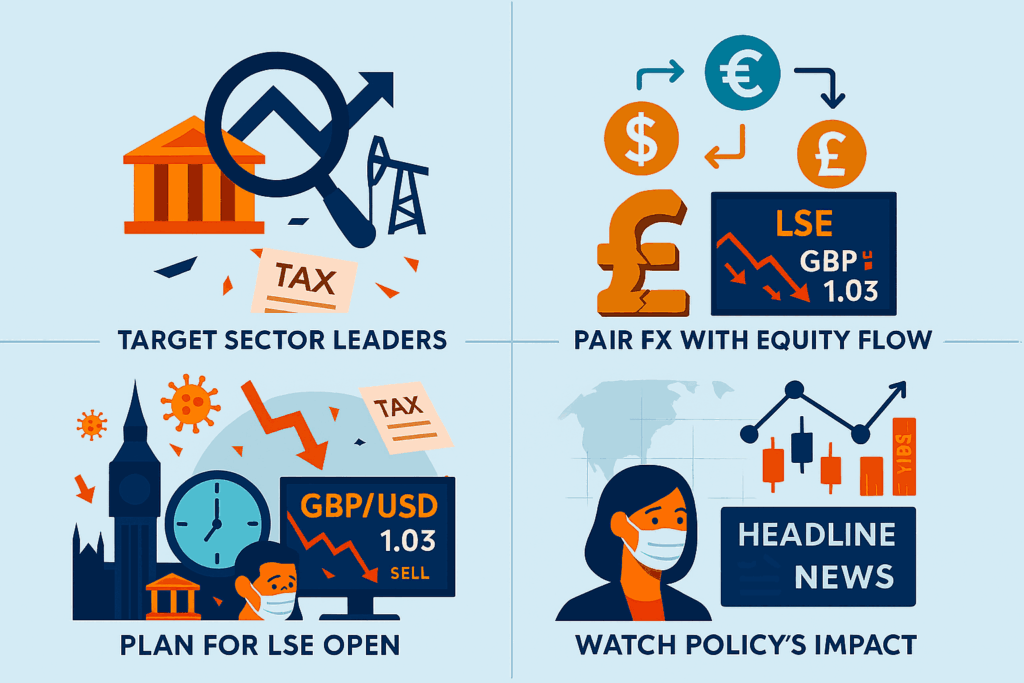
- Track LSE Sector Leaders
Financials and energy stocks often serve as leading indicators for GBP reactions. Monitoring their moves can help anticipate FX direction. - Pair FX with Equity Flows
When foreign investors buy or sell UK equities heavily, GBP pairs usually move in tandem. Watching FTSE flows can complement FX setups. - Expect Amplified Volatility at Market Opens
The LSE open (8:00 AM London time) often delivers the sharpest reactions, especially following overnight shocks. Traders who pre-position or wait for confirmed direction gain an edge. - Connect the Dots with Policy and Headlines
Whether Brexit, pandemic panic, or fiscal blunders, shocks rarely stay confined to equities. FX markets are often the fastest responders.
Conclusion
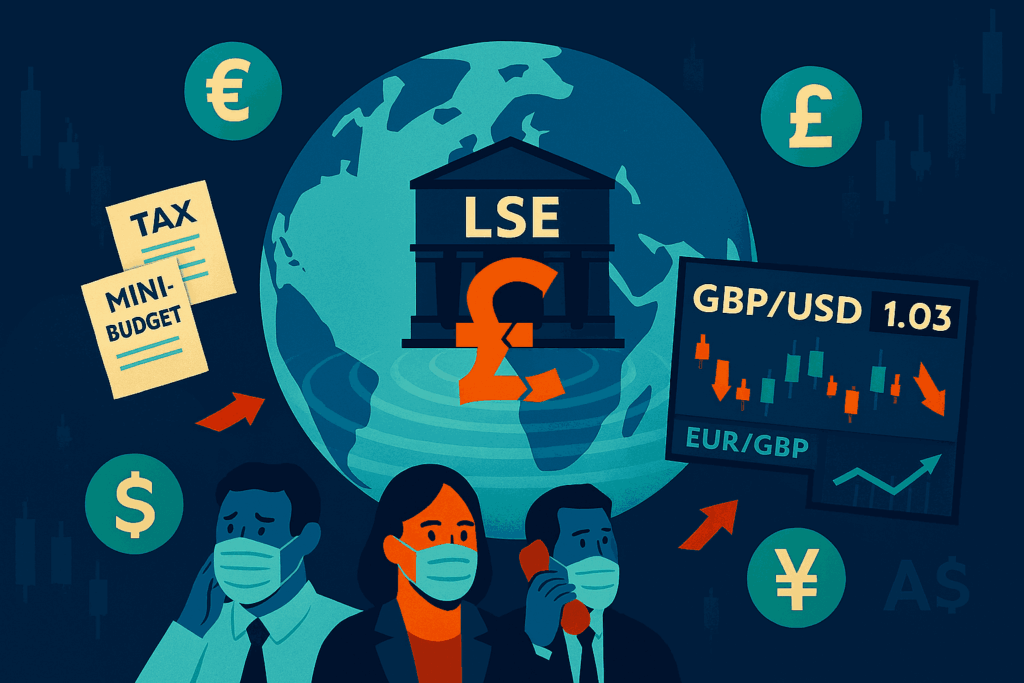
The LSE is more than a stock exchange, it’s a global sentiment gauge. Shocks at the LSE, whether political, economic, or crisis-driven, almost always spill into forex markets. From the Brexit vote to COVID-19 to the 2022 mini-budget crisis, each episode highlights the tight link between London’s equities and global currency flows.
For traders, the lesson is clear: monitoring the LSE is not optional. It’s a critical piece of the puzzle for anyone looking to understand and anticipate forex swings. When the LSE shakes, the currency world feels the tremors.