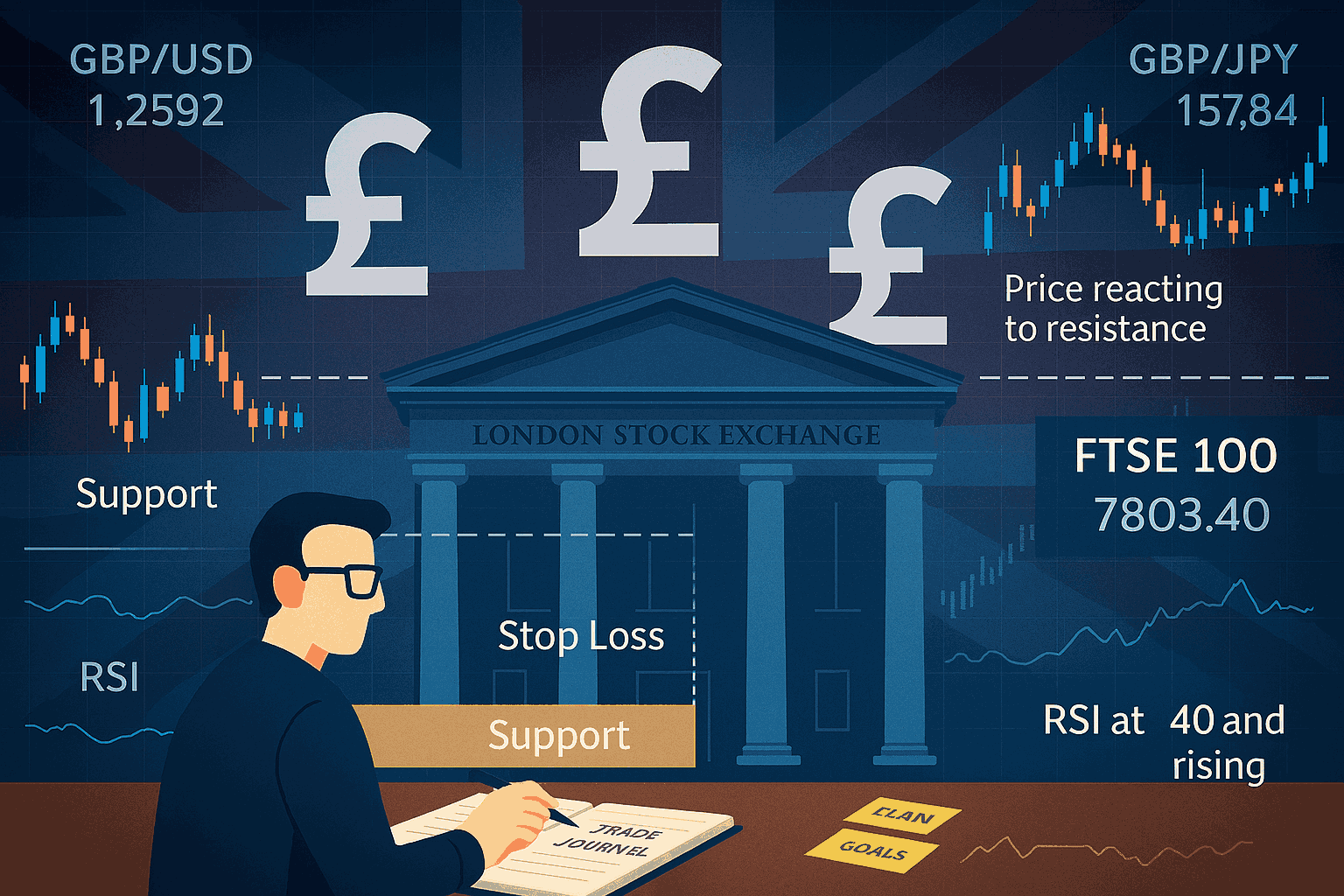
The London Stock Exchange (LSE) is one of the world’s largest and most liquid financial markets. While its primary focus is equities, London Stock Exchange movements influence far more than just stocks. For forex traders, the LSE’s daily activity often acts as a barometer for risk appetite and capital flows, shaping how the British pound (GBP) performs against major currency pairs. Understanding these dynamics is essential for traders who want to anticipate GBP volatility and align positions with broader market sentiment.
Why LSE Matters for Forex
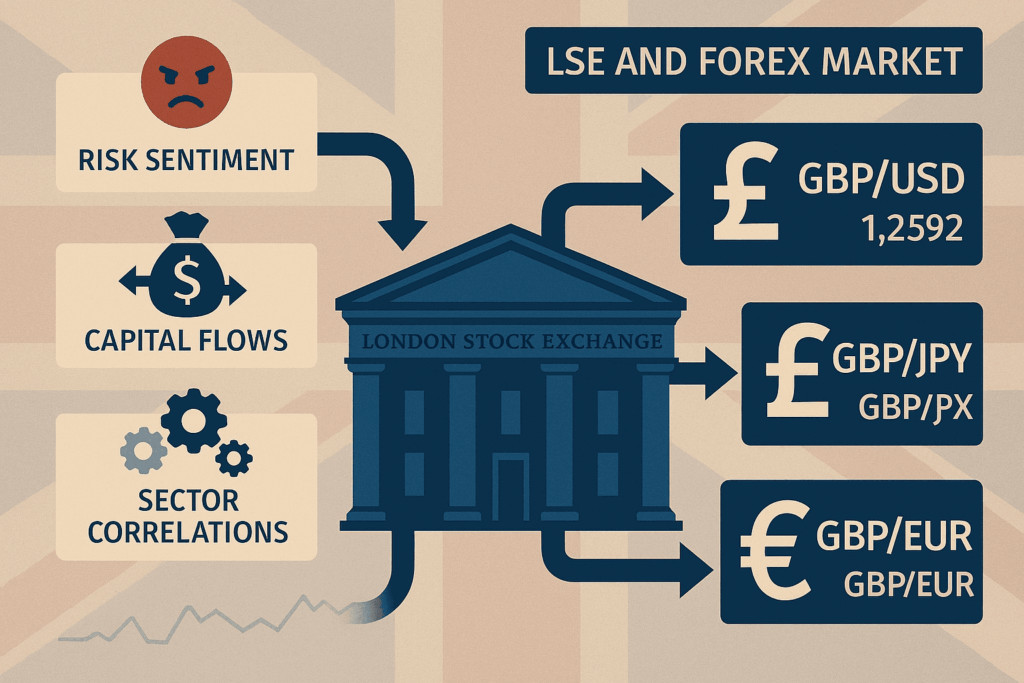
The LSE is a hub for global institutional investors, corporations, and market makers. Since London is the world’s leading forex trading center, stock market developments here naturally spill over into currency trading. Key reasons include:
- Risk Sentiment Indicator: Rising equities often signal strong risk appetite, pushing investors toward riskier assets like GBP over safe-havens such as USD, CHF, or JPY. Conversely, equity sell-offs can spark GBP weakness.
- Capital Flows: Foreign investors buying UK equities must convert their currency into sterling, driving GBP demand. If sentiment shifts and capital leaves UK equities, it creates downward pressure on GBP.
- Sector Correlations: The LSE is home to heavyweights in energy, mining, and banking. Fluctuations in these sectors can affect GBP indirectly, especially when commodity price changes or financial stability concerns are in play.
Short-Term Impacts on GBP Pairs
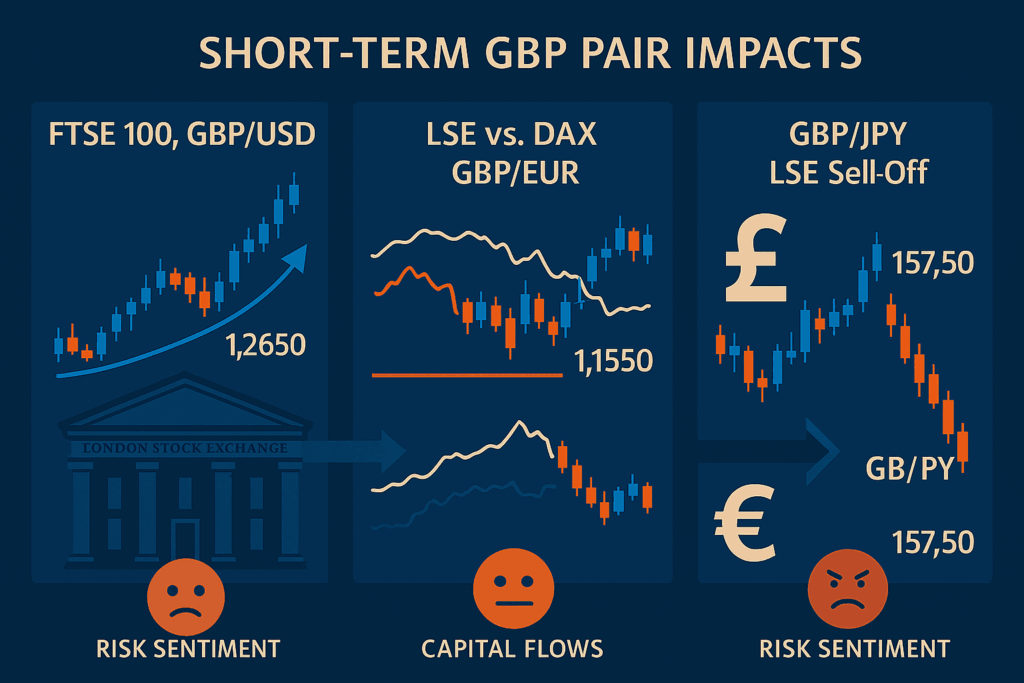
- GBP/USD:
Movements in the FTSE 100 index often set the tone. A strong rally in equities can attract foreign inflows, supporting GBP/USD. However, because the FTSE is multinational-heavy, a weaker pound sometimes boosts FTSE earnings (since they’re reported in GBP). This paradox means traders must carefully interpret equity moves and their currency impact. - GBP/EUR:
The LSE’s performance compared to continental European exchanges like Frankfurt’s DAX can highlight relative growth prospects. If UK equities outperform, it can bolster GBP/EUR as investors favor UK assets over EU ones. - GBP/JPY:
This pair is highly sensitive to risk sentiment. When LSE equities climb, GBP/JPY tends to rise as traders exit the safe-haven yen. Conversely, sharp LSE sell-offs often coincide with steep GBP/JPY declines.
Intraday Patterns and Correlations

During the London open (8:00–10:00 AM GMT), both the LSE and forex markets experience heightened volatility. Equity order flows influence GBP almost immediately, especially when corporate earnings, M&A activity, or geopolitical headlines hit the market. For intraday traders, monitoring FTSE futures alongside GBP pairs can provide a valuable edge.
Moreover, institutional desks often rebalance positions around equity index movements, creating temporary liquidity surges in GBP/USD and GBP/JPY. These intraday swings can offer scalping or short-term trading opportunities.
Longer-Term Themes
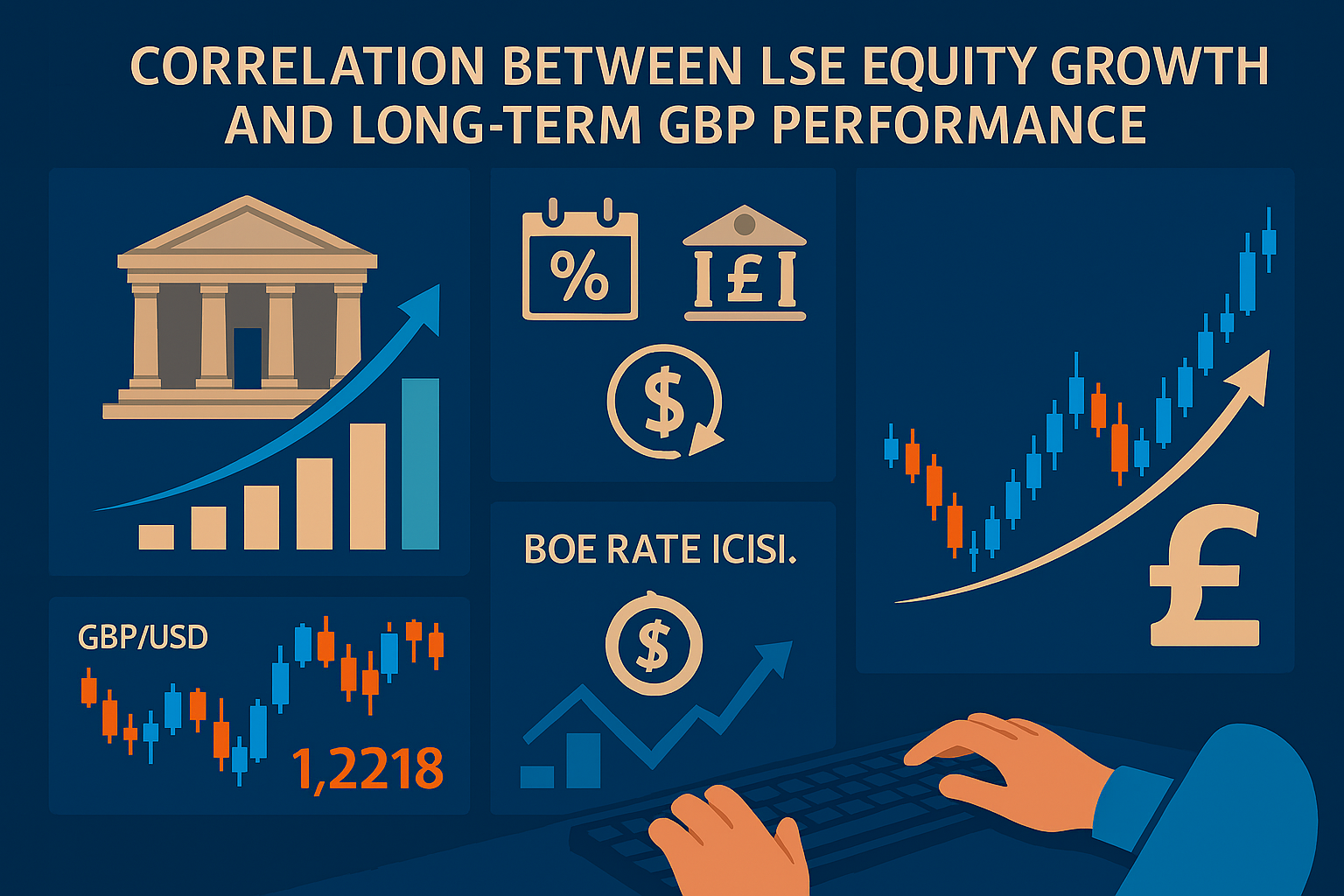
- Economic Growth Outlook: Sustained equity strength often reflects optimism about the UK economy. If the LSE outperforms global peers, it may signal incoming capital inflows that support sterling.
- Interest Rate Expectations: When BoE policy aligns with strong equity markets, GBP gains can accelerate. But if rate hikes weigh on equities, the pound might decouple from stock strength, reflecting monetary tightening risks.
- Global Risk Events: During crises, correlations tighten. A sudden sell-off in LSE equities almost always coincides with GBP weakness, as capital flows rush into safe havens.
How Traders Can Use LSE Insights
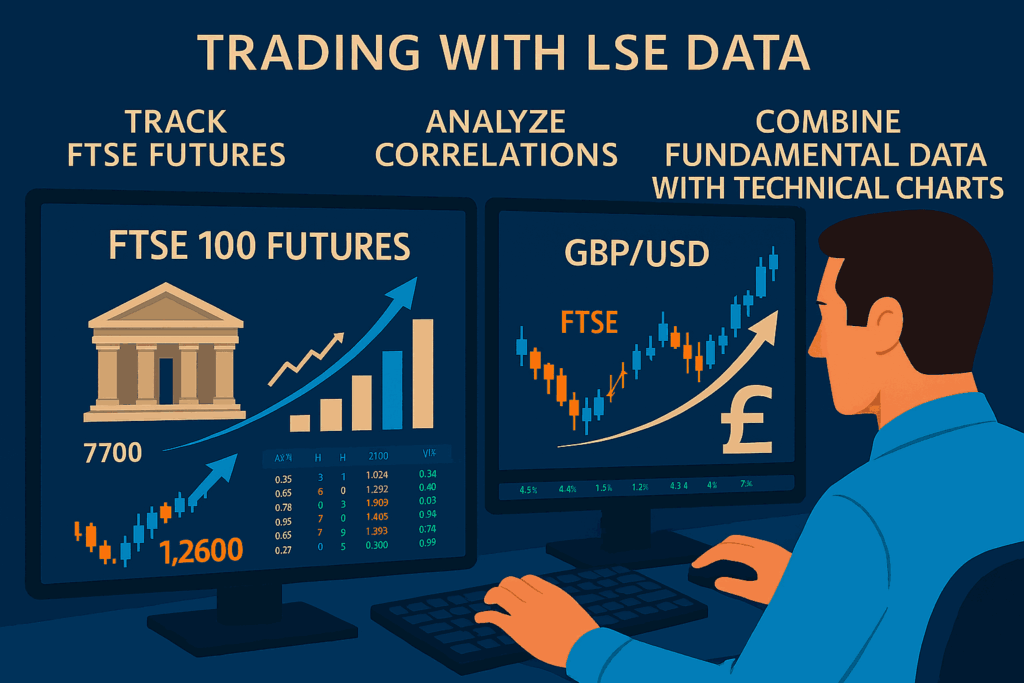
- Track FTSE Futures: Pre-market FTSE moves often foreshadow GBP sentiment before cash equities open.
- Watch Correlations: Monitor whether GBP is moving in tandem with equities or diverging. Divergences may indicate shifting drivers, such as monetary policy.
- Blend Fundamentals and Technicals: Use LSE-driven sentiment to frame bias but rely on technical levels for precise trade entries.
- Event Monitoring: Earnings seasons, UK corporate news, or sector shocks (like oil price moves impacting energy giants) can create ripple effects in GBP pairs.
Final Thoughts
The London Stock Exchange isn’t just an equity market, it’s a reflection of investor confidence in the UK economy and, by extension, the British pound. From intraday volatility to long-term capital flows, LSE movements provide vital clues for GBP/USD, GBP/EUR, and GBP/JPY traders. By integrating equity insights into forex strategies, traders can anticipate sterling shifts with greater clarity and align positions with broader market sentiment.
In short, the LSE is more than a stock market, it’s a daily compass for GBP direction in the global forex landscape.